
Static Electricity and ATEX: How Adiabatic Cooling Reduces Explosion Risk
In an ATEX-classified environment, every potential ignition source warrants careful attention. Static electricity is one such source, and HSE managers all too often underestimate it. Yet, a single uncontrolled electrostatic discharge can be enough to ignite an explosive atmosphere. What many people don’t realize is that adiabatic cooling does more than just protect operators from heat. By its very nature, it also helps reduce the risk of static electricity. Here’s why. Static Electricity: A Constant Physical Hazard in ATEX Zones Static electricity arises from the contact and separation of two materials. When an electron leaves the surface of one object to move to another, an electric potential difference is established. This phenomenon, called triboelectricity, occurs constantly in industrial environments. It can result from a liquid flowing through a pipe, an operator walking on an insulating floor, Or even the emptying of a big bag of powder or friction on a conveyor belt. Taken individually, these charge transfers are imperceptible and harmless. But if the charges accumulate—on metal equipment not connected to ground, on insulating materials, or on the operator themselves—they reach a threshold beyond which they are suddenly released in the form of a spark. In an explosive atmosphere, this spark can trigger an ignition. This is the scenario of an electrostatic accident: subtle in its origin, sudden in its consequences. The most common high-risk situations in industrial settings Among the operations most likely to generate dangerous electrostatic discharges are the transfer of petroleum liquids, the cleaning of tanks, the spillage of powders in flammable atmospheres, and the use of non-conductive solvents in facilities containing isolated metal parts. The human factor also plays a direct role. An operator wearing insulated footwear and walking on a non-conductive floor in an ATEX zone can accumulate static charges and become an ignition source themselves if they touch a non-equipotential conductive surface. In industries with a high risk of combustible dust (grain silos, pharmaceuticals, sugar production, wood processing), the electrostatic risk is compounded by the risk of a dust cloud explosion. Airborne dust has a minimum ignition energy that is sometimes less than 10 millijoules—a level that common electrostatic discharges can easily reach. Air Humidity and Static Electricity: A Direct Physical Link This is where adiabatic cooling comes into play in an unexpected—and particularly valuable—way. The INRS explicitly recommends humidifying the atmosphere to prevent the buildup of electrical charges in explosion-hazardous environments. This recommendation is based on a well-established physical mechanism: air humidity increases the surface conductivity of materials. It facilitates the flow of charges to ground rather than allowing them to accumulate until a disruptive discharge occurs. In practical terms: dry air at 20 % relative humidity promotes electrostatic buildup. Air at 60 % or higher dissipates charges much more quickly. This is why electrostatic accidents occur more frequently in winter (cold, dry air) and in air-conditioned industrial environments without humidification. These are two conditions that drastically lower the relative humidity. Adiabatic cooling: a built-in antistatic benefit The principle of adiabatic cooling relies on passing warm air through a constantly humidified honeycomb media. The evaporation of water in this media lowers the air temperature by 7°C to 12°C and simultaneously increases its relative humidity. This is not a trivial side effect. It is a direct and measurable physical benefit: by humidifying the air at the workstation, the adiabatic cooler acts precisely where the INRS recommends taking action to reduce the risk of static electricity. It helps dissipate static charges continuously, without any additional devices, simply through its normal operation. In sectors where the air is naturally very dry (pharmaceutical packaging rooms, powder storage areas, logistics warehouses under metal roofs in the summer), this controlled humidification effect provides a safety benefit that conventional ventilation systems cannot offer. Do you manage an ATEX site and want to address both thermal comfort and electrostatic risk at the same time? Contact the ClimnTech team for a customized study tailored to your area Why standard equipment is doubly unsuitable in ATEX zones Faced with electrostatic risks and heat in ATEX zones, employers must meet two simultaneous requirements: protect operators from heat and avoid introducing a new ignition source. A standard industrial fan partially addresses the first issue. However, its unprotected electric motor itself poses an electric arc hazard in an explosive atmosphere. It therefore exacerbates the second issue. A conventional portable air conditioner is even worse: compressors, contactors, defrost heating elements, and more. All of these components can generate arcs or hot surfaces that exceed the permitted ATEX temperature classes. The solution is not to choose between comfort and safety. It is to equip yourself with units designed for both. ClimnTech’s expertise: ATEX Zone 1 certification as the industry standard ClimnTech is among the very few manufacturers to offer adiabatic coolers certified for the most stringent ATEX zones. The II 2G IIB T4 Gb marking on each unit guarantees safe use in Zone 1 and Zone 2 for gaseous atmospheres, with a maximum surface temperature maintained at 135 °C. This is well below the ignition thresholds of the most common industrial products. The international IECEx certification complements European ATEX compliance for deployments outside the European Union. Three key features set ClimnTech coolers apart in electrostatic-hazard environments: What this means in practice for the HSE manager: Electrostatic risk management in ATEX zones has traditionally relied on three pillars: grounding of conductive equipment, antistatic PPE for operators, and equipotential bonding between system components. These measures remain essential. ATEX-certified adiabatic cooling is added as a fourth measure, acting on the environment itself before charges are generated. It does not replace
What is an ATEX Zone 1? Zone 2, Zone 21, Zone 22?
In many industrial sectors, certain workspaces pose a permanent or occasional risk of explosion. These environments are subject to a specific regulatory classification: they are referred to as ATEX zones, an acronym for ATmosphères EXplosives. For any HSE manager, facility manager, or maintenance manager, understanding this classification is a legal requirement. Similarly, understanding its practical implications for workplace equipment is an operational necessity. ClimnTech provides an overview. What is an explosive atmosphere? An explosive atmosphere forms when a mixture of flammable substances (in the form of gases, vapors, mists, or dust) combines with air in proportions sufficient to ignite in the presence of an ignition source. If combustion spreads instantly throughout the entire mixture, it causes a sudden rise in pressure: this is an explosion. The distinction between an explosive atmosphere and a potentially explosive atmosphere is important. An explosive atmosphere is already in a state ready to ignite. An explosive-potential atmosphere is one that may become explosive depending on local conditions: a pipe leak, a pipe rupture, temperature fluctuations, or the startup of a machine. There are numerous ignition sources that can trigger an explosion: electric or electrostatic arcs, mechanical sparks, hot surfaces, and open flames. It is precisely this broad spectrum of risks that necessitates strict regulations for all equipment deployed in these areas. The Regulatory Framework: Two ATEX Directives European regulations organize responsibilities around two complementary directives. Directive 2014/34/EU (formerly 94/9/EC) applies to equipment manufacturers. It requires CE marking for devices used in ATEX zones and defines the safety categories that each piece of equipment must comply with based on the zone in which it will be deployed. Directive 1999/92/EC applies to employers. It requires them to assess explosion risks at their facilities, delineate ATEX zones, and document this analysis in an Explosion Protection Document (EPD). This document must demonstrate that the risks have been assessed, that the measures taken meet the directive’s requirements, and that the equipment used is suitable for the zone in which it operates. The zoning process itself is the responsibility of the facility manager. ATEX Zone Classification: Gases and Dusts ATEX zoning classifies areas based on the frequency and duration of the likely presence of an explosive atmosphere. Two types of risks coexist: gas/vapor/mist atmospheres (G zones) and dust atmospheres (D zones). Gas Zones (G) Zone 0: The explosive atmosphere is present continuously or for very long periods (more than 1,000 hours per year). A typical example is the interior of a tank containing a flammable liquid. Equipment used here must be classified as Category 1G, the highest safety level. Zone 1: The explosive atmosphere is likely to occur occasionally during normal operation, between 10 and 1,000 hours per year. Examples: the immediate vicinity of a valve or flange on a pipeline carrying flammable products; the area around a hydrocarbon storage vent. The required equipment is Category 2G. Zone 2: An explosive atmosphere is unlikely to occur during normal operation, and if it does occur, it persists only briefly (less than 10 hours per year). Examples: Areas adjacent to Zone 1, ventilated rooms containing hazardous installations. Category 3G equipment is sufficient. Dust Zones (D) Zone 20: permanent or prolonged presence of flammable dust clouds. Required equipment category: 1D. Zone 21: occasional occurrence of dust clouds during normal operation. Required category: 2D. Affected sectors: flour mills, grain silos, sugar industries, wood processing, pharmaceuticals. Zone 22: Unlikely and short-lived presence of airborne dust. Required category: 3D. A key technical point to remember regarding dust: the visible presence of deposits already indicates a potential hazardous zone. Starting at 50 grams of dust per square meter (equivalent to a 0.3 mm layer), the conditions for an explosion are met if this deposit is suspended in the air in the presence of a sufficiently powerful ignition source. Temperature class: a decisive parameter Every piece of equipment deployed in an ATEX zone is assigned a temperature class, designated T1 through T6, which indicates the maximum surface temperature the device can reach. This value must remain below the auto-ignition temperature of the gas or dust present in the zone. For example, ethylene spontaneously ignites at 425 °C (class T2), while certain organic dusts have much lower auto-ignition temperatures. Equipment classified as T4 does not exceed 135 °C at the surface. This covers the vast majority of common industrial environments. Do you manage an ATEX-classified site and are looking for compliant thermal comfort solutions? Contact the experts at ClimnTech for advice tailored to your zone. Understanding ATEX Equipment Markings Any device certified for ATEX zones bears a standardized marking that summarizes all of its safety characteristics. Let’s take a look at the marking on ClimnTech cooling units: II 2G IIB T4 Gb. This marking is interpreted as follows: In practical terms, this marking means that the equipment can be deployed in Zone 1—the most common risk level in surface industries with a risk of gas explosions. Sectors Affected by ATEX Zones ATEX zones are found across a very broad industrial spectrum: Petrochemicals and refining: areas around storage tanks, distillation columns, and pump rooms. The risk of flammable gases is constant in certain areas. Pharmaceuticals and fine chemicals: handling of volatile organic solvents, reactors under controlled atmospheres. Food processing: grain silos, malting plants, sugar refineries, flour mills—combustible organic dusts create extensive Zone 21 and 22 areas. Surface treatment and industrial painting: paint booths, drying areas using solvents. Gas stations and hydrocarbon storage facilities: unloading areas, filling pits, and areas near vents. Water treatment and anaerobic digestion: biogas production and storage areas. Thermal comfort in ATEX zones: a challenge that most equipment is unable to address
Heat regulations at work: legal obligations and practical solutions

Heat in the workplace is no longer just a matter of discomfort. As of July 1, 2025, a decree requires employers to implement active preventive measures as soon as the first episodes of intense heat occur. Whether due to a lack of awareness of the law, inaction, or an inadequate solution, the risks are real—both human and legal. Here’s what the regulations require—and how to respond effectively, even in the most challenging environments. What the Law Says Since July 2025 Decree No. 2025-482 of May 27, 2025, regarding the protection of workers against heat-related risks, introduces a specific regulatory framework applicable to all workplaces. It structures employers« obligations around a four-level weather alert system defined by Météo-France: Green Alert: seasonal monitoring, with no specific mandatory actions triggered. Yellow Alert: intense heat wave lasting 1 to 2 days. The employer must activate preventive measures. Orange Alert: a prolonged heatwave, posing a health risk to the entire exposed population. In the construction industry, this threshold also entitles workers to compensation for lost work time. Red Alert: an extreme heatwave with a significant impact on public health. The level of requirements reaches its maximum. As soon as a yellow alert is issued (i.e., a simple »heat spike« lasting two days), the employer is subject to active obligations. Simply opening windows is no longer sufficient. The Employer’s Specific Obligations The decree sets out an explicit list of measures that employers must implement during an intense heat wave. These obligations cover several areas. Workstation and Workplace Design: Modifying the layout to reduce heat exposure; installing sunshades on exposed surfaces. Work organization: Adjusting schedules, introducing breaks, and rotating workers among the most exposed workstations. Technical cooling measures: The text explicitly mentions fans and misters among the required equipment. A mobile adiabatic cooler (link to Article No. 3) is precisely the most effective technical solution to meet this requirement. Access to cool drinking water: The employer must ensure a sufficient supply of cool water near workstations, along with a means of keeping it cold. In the absence of running water, the legal minimum is 3 liters per day per worker. This does not include personal protective equipment (PPE) suitable for high temperatures. Training and informing teams: Employees must know what to do in the event of extreme heat and how to properly use thermal PPE. Finally—and this is a point that is often overlooked—the decree requires that the risk of extreme heat be included in the Single Document for the Assessment of Occupational Risks (DUERP). Failure to update this document constitutes a documented breach, which may result in the employer being held liable in the event of an accident. The Most Vulnerable Sectors Not all sectors are equally vulnerable to heat. Environments that combine external heat with internal heat generation pose the highest risks: metal production workshops, foundries, industrial bakeries, logistics warehouses with metal roofs, printing plants, laundries, and poorly ventilated call centers. Outdoor workers (construction, agriculture, forestry) also benefit from specific, strengthened provisions in the decree. One particularly complex case warrants attention: environments classified as ATEX (Explosive Atmospheres). In these areas, excessive heat combined with the use of restrictive antistatic PPE significantly increases the physiological risk to operators. However, the majority of cooling solutions available on the market (standard industrial fans, conventional portable air conditioners) are not certified for use in explosive zones. Their use in these areas is even prohibited and dangerous. Does your company need to comply with heat-related regulations before summer? Request a customized assessment from the ClimnTech team Why the adiabatic cooler directly meets legal requirements The decree explicitly cites »technical measures” for heat reduction as an employer’s obligation. The ClimnTech mobile adiabatic cooler meets this requirement point by point. The specific solution for ATEX zones: This is the most important differentiator of the ClimnTech offering compared to the rest of the market. In ATEX-classified zones (petrochemical, pharmaceutical, grain silos, surface treatment, and flammable product storage facilities), heat regulations apply with the same rigor as elsewhere. However, standard solutions are unusable. ClimnTech’s adiabatic coolers are certified for Zone 1 and Zone 2 (marking II 2G IIB T4 Gb), compliant with the strictest ATEX directives and the international IECEx certification. To date, they are one of the few cooling solutions certified for the most restrictive explosive atmospheres. Their natural operating principle actually enhances safety: the slight humidification of the air reduces static electricity. This is an explosion risk factor that is directly mitigated by the device’s very operation. For an HSE manager in an ATEX environment, this is the only solution that simultaneously meets the legal obligation to protect against heat and the specific safety requirements for explosive zones. Key Takeaways Workplace heat regulations are no longer merely a recommendation: as of July 1, 2025, they are a documented and enforceable obligation. It takes effect as soon as the first yellow weather alert is issued and requires the deployment of technical resources, an update to the DUERP, and appropriate organizational measures. The ClimnTech mobile adiabatic cooler is the most direct technical solution to these requirements: effective, quick to deploy, energy-efficient, and compatible with the most demanding environments, including ATEX zones. Whether you’re an HSE manager, production director, or business owner: don’t let summer get ahead of your compliance efforts. Contact ClimnTech for advice tailored to your site.
Air Freshener for Events: The Complete Guide (Weddings, Trade Shows, Exhibitions)
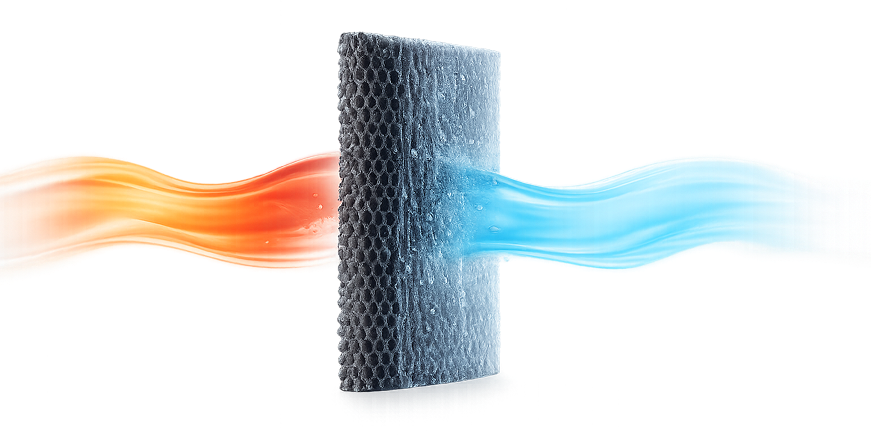
A wedding under a big top in July, an art opening in a gallery without air conditioning, a trade show under a glass roof that traps heat all day long: the thermal comfort of guests and staff directly determines the success of an event. However, traditional air conditioning is often not a viable option in these settings. Indeed, it’s often too cumbersome to install, too energy-intensive, too noisy, and too intrusive. The mobile adiabatic air cooler is specifically designed to address these challenges. Here’s everything an event planner needs to know before summer. Why Conventional Air Conditioning Isn’t Suitable for Events A compression-based air conditioner requires a fixed infrastructure: drilling, ductwork, outdoor units, and properly sized electrical connections. In a temporary space (marquee, reception tent, rented exhibition hall, castle hall), this type of installation is neither possible nor economically justifiable for just a few days of service. Added to this is the noise pollution. In fact, a chiller unit or a high-powered portable air conditioner produces constant background noise. This is completely incompatible with speeches, ceremonies, music, or exhibitions. Finally, aesthetics matter. No one wants to see bulky technical equipment taking center stage amid carefully arranged decor. The adiabatic air cooler: the principle that changes everything Adiabatic cooling is based on a natural physical phenomenon known since ancient times: the evaporation of water absorbs heat from the air. In practice, a fan draws in warm air and passes it through a constantly moistened honeycomb media. The air emerges cooled by 7 °C to 12 °C, depending on the ambient humidity. This is achieved without any refrigerant, without a compressor, and with the power consumption of a simple fan. The result: a cool, gentle, and quiet airflow, operational within minutes after plugging into a standard outlet and refilling with water. Events: Real-World Applications Weddings and Receptions in Tents Tents trap heat. The floor heats up, the fabric traps the air, and guests in evening attire quickly become uncomfortable. Two or three strategically positioned adiabatic coolers create immediate comfort zones. We recommend installing them near the tables, by the dance floor, and at the entrance. The unit’s discreet design is a major advantage: at ClimnTech, the equipment is 100% customizable to blend in with the surrounding decor. This is nothing like a standard portable air conditioner, which can ruin a carefully arranged floral display. Trade Shows and Fairs In exhibition halls, body heat combined with lighting and technical equipment can raise the temperature several degrees above outdoor levels. As a result, it’s not uncommon for visitors to cut their visits short. Conclusion: exhibitors lose commercial effectiveness. ClimnTech portable air coolers are positioned at aisle entrances, in exhibitor booths, or along conference areas. They can be installed on any surface without any construction work and can be moved from one booth to another if needs change during the event. Museums, Exhibition Centers, and Heritage Sites These spaces present two specific challenges: protecting the artworks and enhancing the venue’s appeal. A wall-mounted air conditioner or a noisy portable unit undermines both. The ClimnTech adiabatic cooler slightly humidifies the air. This can help prevent the air from becoming too dry in certain spaces. Its sleek design and customizable finishes allow it to blend seamlessly into a museum or heritage setting without disrupting the aesthetics. Our equipment is therefore ideal for the châteaux of the Loire Valley, art galleries, and exhibition centers. Sports Events and Event Villages Covered grandstands, VIP areas under tents, reception zones: temporary summer installations require a solution that can be deployed quickly and is compatible with a construction site power supply or a generator. The low power consumption of the adiabatic air cooler (compatible with temporary electrical setups) makes it an ideally suited solution. Are you organizing an event this summer and looking for a discreet, high-performance cooling solution? Contact the ClimnTech team for personalized advice. Factors to consider before choosing an event air cooler: The volume to be cooled. A unit is sized based on its airflow rate, expressed in m³/h, relative to the volume of the space. A 500 m² tent with a 4-meter ceiling height contains 2,000 m³ of air. It therefore requires several units positioned around the perimeter, directed toward occupied areas. Natural Ventilation of the Venue Adiabatic cooling is most effective in well-ventilated or open spaces. The more the air is renewed, the more pronounced the effect. Tents with raised sides or halls with an open ridge are ideal configurations. Local Humidity Thermal performance depends on the outdoor relative humidity. The drier the air, the more dramatic the temperature drop. In regions with dry summers (Rhône-Alpes, Midi, inland areas), a temperature difference of 10°C to 12°C is regularly achieved. Water Supply: ClimnTech models feature a built-in tank for complete autonomy or can be connected to a standard water supply for automatic refilling via a float valve. Both options cover all event configurations. Customization: The ClimnTech Feature That Makes the Difference This is one of the key factors that sets ClimnTech apart from most manufacturers of industrial coolers: every unit is customizable. Color, finish, and cladding: the units can be adapted to the event’s visual identity, the venue’s decor, or the aesthetic requirements of even the most discerning organizers. A discreet, quiet cooler that blends into the decor: guests feel the cool air without ever seeing the equipment. This is precisely what organizers of high-end weddings, museum directors, and trade show managers are looking for. In summary: what the adiabatic air cooler brings to the events industry First, a temperature reduction of 7 °C to 12 °C in targeted areas; second, installation in just a few minutes without any construction work. Additionally, it offers power consumption compatible with temporary setups, quiet operation, and customizable aesthetics. In short, the adiabatic air cooler has become the standard for all organizers who refuse to choose between comfort and elegance.
Adiabatic cooler vs. traditional air conditioning: which choice for a workshop?
As soon as temperatures rise, the issue of thermal comfort in the workshop comes into play. There are two main types of solutions available: conventional air conditioning, which is well known, and the adiabatic cooler, which is still too often overlooked. However, for the vast majority of industrial environments, the two options are far from equivalent. The experts at ClimnTech explain why. Two technologies, two philosophies Conventional air conditioning relies on a thermodynamic compression cycle. Essentially, a compressor compresses a refrigerant gas, which then expands to absorb heat from the ambient air. This process produces cool air, but it also releases heat outside. As a result, it consumes a lot of electricity and requires a fixed installation involving often extensive HVAC work. The adiabatic cooler, on the other hand, operates on a radically different—and fundamentally simpler—principle. A fan draws in hot outdoor air and forces it through a constantly humidified honeycomb media panel. As the air passes through this panel, it releases its heat to allow the water to evaporate. It emerges naturally cooled. In short: no refrigerant, no compressor, no construction work. Just air and water. A Significant Difference in Energy Consumption This is the most compelling argument in favor of adiabatic cooling: it consumes up to 80 % less electricity than a conventional air conditioner. Whereas an industrial air conditioner requires several kilowatts to operate, an adiabatic cooler uses only the power of a fan motor. So, against the backdrop of a sustained rise in energy costs, these operating savings profoundly change the profitability analysis of a piece of equipment. The initial investment, significantly lower than that of a centralized system, pays for itself quickly. Mobility: a decisive advantage for the workshop Conventional air conditioning requires a fixed installation. It treats a total volume of air, regardless of whether the space is occupied or not. In a workshop with localized workstations, high ceilings, or frequent openings, this approach cools thousands of cubic meters of air… for the comfort of a single operator. ClimnTech adiabatic coolers are mounted on wheeled frames. They can be set up in just a few minutes, without any construction work, and positioned exactly where the operator needs them. Whether changing workstations, reorganizing the workshop, or addressing a one-time need: the solution adapts to the people, not the building. In short, this flexibility makes it an ideal solution for production workshops, logistics warehouses, storage areas, and even open or semi-open spaces. These are all settings where conventional air conditioning is often ineffective or impossible to install. Tangible cooling performance: Adiabatic cooling lowers the ambient temperature by 7 °C to 12 °C, depending on atmospheric conditions. Its performance actually increases as temperatures rise: the hotter and drier the air, the more powerful the evaporation, and the more pronounced the cooling effect. As a point of reference: at temperatures of 29 °C or higher, studies show that an operator’s productivity drops by 18 % and errors increase by 40 %. Bringing the temperature at the workstation down to an acceptable level is not merely a matter of comfort. It is essential for performance and safety. An Unmatched Environmental Footprint Conventional air conditioning uses refrigerants with a significant global warming potential. It also releases heat into the outside environment, contributing to urban heat islands. The adiabatic cooler, on the other hand, emits no polluting gases. In fact, it consumes only very small amounts of water and electricity. It slightly humidifies the air, which (in the case of ATEX-certified ClimnTech equipment) is an additional benefit. This slight humidification reduces static electricity and limits the risk of explosion in classified environments. Are you equipping a workshop, warehouse, or production area? Request a quote from our experts What Conventional Air Conditioning Does Better Objectivity requires us to mention this. Compression-based air conditioning maintains a precisely regulated temperature, regardless of outdoor humidity levels. It is therefore suitable for environments that require strict temperature control. This includes computer rooms, pharmaceutical laboratories, and certain food production lines. It also performs better in completely enclosed and airtight spaces, where it is acceptable to condition a fixed volume and maintain a narrow temperature range. Summary Comparison Table Criterion Adiabatic Cooler Conventional Air Conditioning Energy consumption Very low (−80 %) High Installation No construction required, portable Fixed, construction required Purchase cost Affordable High Maintenance Simple (no compressor) Complex (gas, compressor) Efficiency in open spaces Excellent None or very low Carbon footprint Minimal Significant Precise temperature control No Yes ATEX zone compatibility Yes (certified range) Not standard Which option is right for your workshop? Does your workshop have any of these characteristics: large volumes, doors frequently opened, localized workstations, ATEX requirements, or an operating budget that needs to be kept under control? If so, an adiabatic cooler meets your needs with greater efficiency than conventional air conditioning—and at a much lower total cost. Compression-based air conditioning remains relevant in very specific contexts. For the majority of industrial workshops, warehouses, and production spaces, adiabatic cooling has become the standard. Would you like a solution tailored to your facility? Contact the ClimnTech team for personalized advice
 French
  English