
In an ATEX-certified environment, every potential ignition source deserves rigorous attention. Static electricity is one of them, and HSE managers too often underestimate it. Yet, a single uncontrolled electrostatic discharge can be enough to ignite an explosive atmosphere. What many don't realize is that adiabatic cooling doesn't just protect operators from heat. By its very nature, it also works to reduce the electrostatic risk. Explanations.
Static electricity: a persistent physical hazard in ATEX zones
Static electricity is born from the contact and separation of two materials. When an electron leaves the surface of one body to join another, an electrical potential difference is established. This phenomenon, called triboelectricity, occurs constantly in industrial environments. This can include the passage of a liquid through a pipe, an operator moving on an insulating floor, or the emptying of a bulk bag of powder or the friction of a conveyor belt.
Taken on their own, these charge transfers are imperceptible and harmless. However, if the charges accumulate (on ungrounded metallic equipment, on insulating materials, or on the operator themselves), they reach a threshold from which they are suddenly released in the form of a spark.
In an explosive atmosphere, this spark can trigger inflammation. This is the scenario of an electrostatic accident: discreet in its origin, brutal in its consequences.
The most common risk situations in an industrial environment
Among the operations that most commonly generate dangerous electrostatic discharges are petroleum liquid transfers, tank cleaning, powder spills in flammable atmospheres, and the use of non-conductive solvents in installations with isolated metal parts.
The human factor also plays a direct role. An operator equipped with insulating soles, working on non-conductive ground in an ATEX zone, can accumulate static charges and become a source of ignition themselves if they touch a non-equipotential conductive surface.
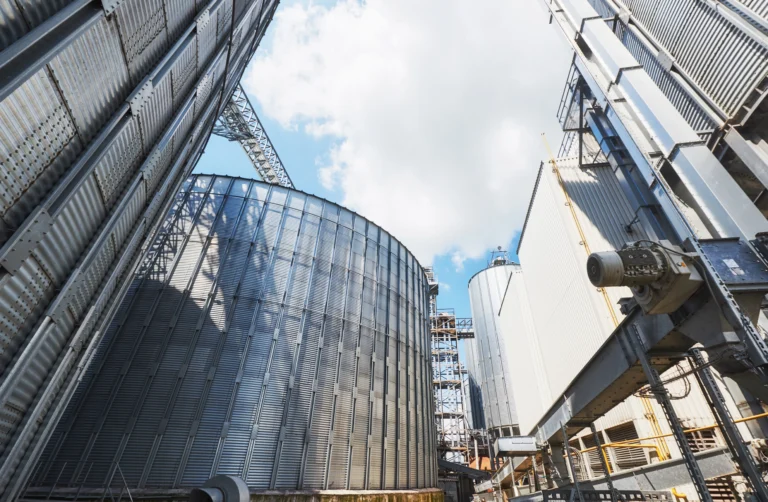
In industries with a high risk of combustible dust (grain silos, pharmaceuticals, sugar industry, wood processing), the electrostatic risk is coupled with the risk of dust explosion. Suspended dust has a minimum ignition energy sometimes less than 10 millijoules: values that common electrostatic discharges easily reach.
Air Humidity and Static Electricity: A Direct Physical Link
This is where adiabatic cooling comes in unexpectedly, and particularly valuable.
The INRS explicitly recommends humidifying the atmosphere to avoid promoting the buildup of electrical charges in environments at risk of explosion. This recommendation is based on a well-established physical mechanism: air humidity increases the surface conductivity of materials. It facilitates the flow of charges to the ground instead of allowing them to accumulate until disruptive discharge.
In practical terms: dry air with a relative humidity of 20 % promotes electrostatic buildup. Air with a relative humidity of 60 % or higher dissipates charges much more quickly. This is why electrostatic accidents occur more frequently in winter (cold, dry air) and in air-conditioned industrial environments without humidification—two conditions that drastically lower the relative humidity.
Adiabatic cooling: a built-in antistatic benefit
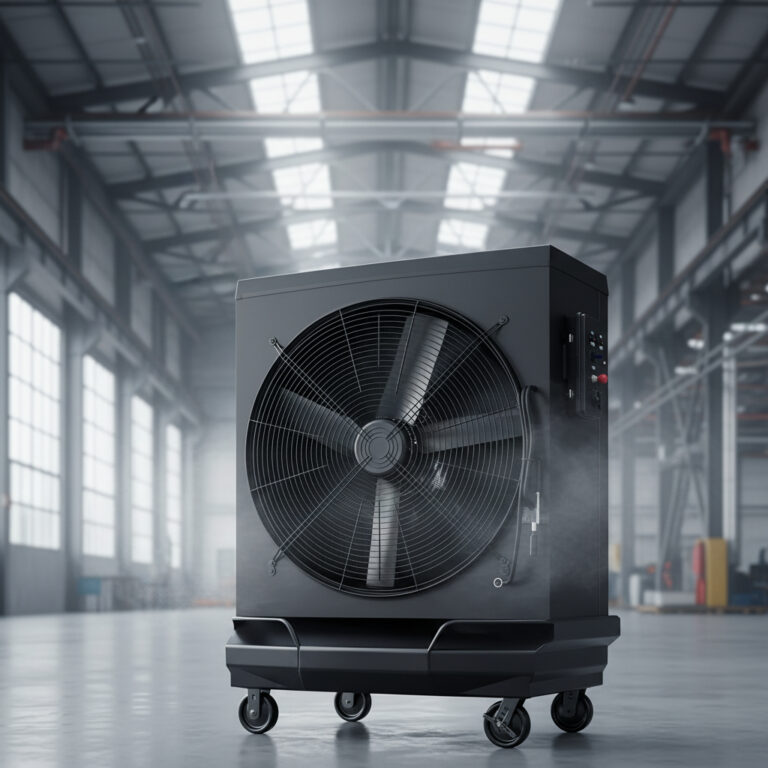
The principle of adiabatic cooling is based on passing hot air through a constantly humidified porous medium. The evaporation of water in this medium lowers the air temperature by 7°C to 12°C and simultaneously increases its relative humidity.
This is not an anecdotal side effect. It's a direct and measurable physical benefit: by humidifying the air at the workstation, the adiabatic cooler acts precisely where INRS recommends acting to reduce electrostatic risk. It continuously dissipates static charges without any additional devices, solely through its normal operation.
In sectors where the air is naturally very dry (pharmaceutical packaging rooms, powder storage areas, logistics warehouses with metal roofs in summer), this controlled humidification effect provides a safety value that conventional ventilation systems cannot offer.
You manage an ATEX site and want to simultaneously address thermal comfort and electrostatic risk?
Contact the ClimnTech team for a study tailored to your area.
Why are standard equipment doubly unsuitable in ATEX zones?
Faced with electrostatic risk and heat in ATEX zones, employers must meet two simultaneous imperatives: thermally protect their operators and not introduce a new ignition source.
A standard industrial fan partially solves the first problem. But its unprotected electric motor itself constitutes a risk of electric arc in an explosive atmosphere. It therefore aggravates the second.
A conventional mobile air conditioner is even worse: compressor, contactors, defrosting resistors, ... So many components likely to generate arcs or hot surfaces exceeding authorized ATEX temperature classes.
The answer isn't choosing between comfort and safety. It's equipping yourself with devices designed for both.
ClimnTech's Expertise: ATEX Zone 1 Certification as a Market Benchmark
ClimnTech is among the very few manufacturers to offer certified adiabatic coolers for the most demanding ATEX zones. The II 2G IIB T4 Gb marking on each unit guarantees safe use in Zone 1 and Zone 2 for gaseous atmospheres, with a maximum surface temperature maintained at 135 °C. Well below the ignition thresholds of the most common industrial products.
The international IECEx certification complements European ATEX compliance for deployments outside the European Union.
Three elements distinguish ClimnTech coolers in electrostatic discharge (ESD) risk environments:
- Natural air humidification. Produced by the adiabatic process, it actively reduces the accumulation of static charges at the workstation, offering unparalleled safety benefits compared to conventional ventilation systems.
- Absence of arc-generating components. No compressor, no high-power contactor, no heating resistor. ClimnTech appliances have an electrical architecture designed entirely for explosive environments.
- Mobility. On a wheeled chassis, ClimnTech coolers move according to the teams' needs, cover the most heat-exposed workstations, and adapt to workshop configuration changes without any installation modifications.
What this concretely changes for the HSE manager
The management of electrostatic risk in ATEX zones traditionally relies on three pillars: grounding of conductive equipment, antistatic PPE for operators, and equipotential bonding between installation components. These measures remain essential.
ATEX-certified adiabatic cooling is added as a fourth lever, acting on the environment itself, upstream of charge formation. It does not replace the other measures but continuously and passively reinforces them without further operator intervention.
For an HSE manager who needs to document their risk assessment in the DRPCE, this is a key argument: the device helps reduce the probability of an ignition source occurring, in addition to fulfilling legal obligations for heat protection since the decree of May 27, 2025.
A solution that solves two problems simultaneously
In ATEX zones, every piece of equipment introduced into the workspace must demonstrate its compatibility with the risk level of the zone. ClimnTech adiabatic coolers do this and go further by actively contributing to reducing one of the most present risk factors in these environments: the accumulation of electrostatic charges.
In short, thermal comfort for operators, reduction of electrostatic risk, and ATEX regulatory compliance. These are three challenges solved by a single, certified, and documented piece of equipment.
Refreshment, ATEX safety, reduction of electrostatic risk: discover how ClimnTech equips your most exposed workstations.

 French
  English