
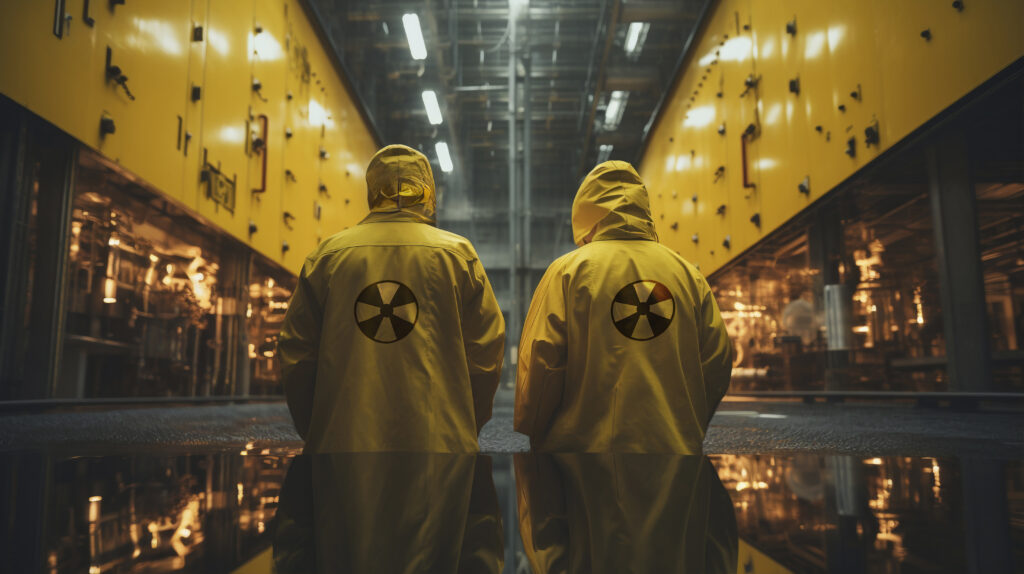
Thirty-two degrees in the workshop, an operator in a coverall handling solvents three meters away from a tank classified as Zone 1, and a desk fan lying around in a corner? This is still a common scene in many industrial sites during the summer. The problem is that this fan, like the small portable air conditioner one might be tempted to plug in nearby, has no business being there. In an ATEX zone, cooling a workstation is not just about lowering the temperature. Indeed, every device introduced must be designed so that it does not itself become the source of ignition we are trying to avoid.
ATEX zone: a useful reminder before going any further
An ATEX zone is a location where a mixture of flammable gases, vapours, mists or dusts with air can form an explosive atmosphere. Directive 1999/92/EC classifies these areas according to the frequency and duration of the risk: zones 0, 1 and 2 for gases and vapours, zones 20, 21 and 22 for dusts.
The lower the number, the more frequent or permanent the presence of an explosive atmosphere. This classification, carried out by a competent person during site zoning, then determines everything else, namely: what equipment is permitted to enter, under what certification, and with what safety margins.
Why a traditional air conditioner has no place here
A commercial air conditioner contains several potential ignition sources: the compressor generates heat and mechanical friction, electrical components produce sparks during switching, and certain motors reach surface temperatures well above the thresholds tolerated in an explosive atmosphere. Therefore, in an area where a single static spark is enough to trigger an explosion, an uncertified appliance becomes a more serious risk factor than the heat it is supposed to fight.
For this reason, any equipment intended for an ATEX zone must comply with the European ATEX marking (for example II 2G IIB T4 Gb) and, for international markets, with IECEx certification. This marking guarantees a specific protection method adapted to the category of gas or dust present on the site. These notably include flameproof enclosures, increased safety, and encapsulation.
The employer's obligation does not stop at explosion safety
ATEX classification does not exempt a company from its obligations regarding workplace thermal conditions. The Labor Code requires that temperature be taken into account in occupational risk assessments, and data from the INRS are unequivocal regarding the consequences of poorly controlled heat: at temperatures as low as 29 °C at the workstation, productivity drops by approximately 18 % and the error rate increases by nearly 40 %. In a workplace subject to explosion risk, an error caused by heat-related fatigue is no trivial matter. It can directly compromise the vigilance required when handling flammable products.
In other words, the absence of cooling solution adapted is not just a comfort issue. It is a dual risk, thermal and operational, which must appear in the single risk assessment document just like the explosion risk itself.
It is precisely this intersection of ATEX safety and occupational health that we deal with every day at ClimnTech.
So, if your Single Risk Assessment Document Occupational Risk Assessment Document mention a thermal risk at a classified facility, let's discuss it. A quick diagnosis of your site often makes it possible to identify the most relevant solution in a few days. Contact us!
What technical solutions actually exist
Three families of hardware meet this need today, with very different approaches.
Explosion-proof air conditioners
They reproduce the principle of conventional air conditioning (refrigeration cycle, compressor) but within an ATEX-certified enclosure that neutralizes every potential ignition source. They are well-suited for closed premises requiring precise temperature control, with the disadvantage of a power consumption close to that of traditional air conditioning and a higher purchase cost, linked to certification and installation.
Adiabatic or evaporative cooling
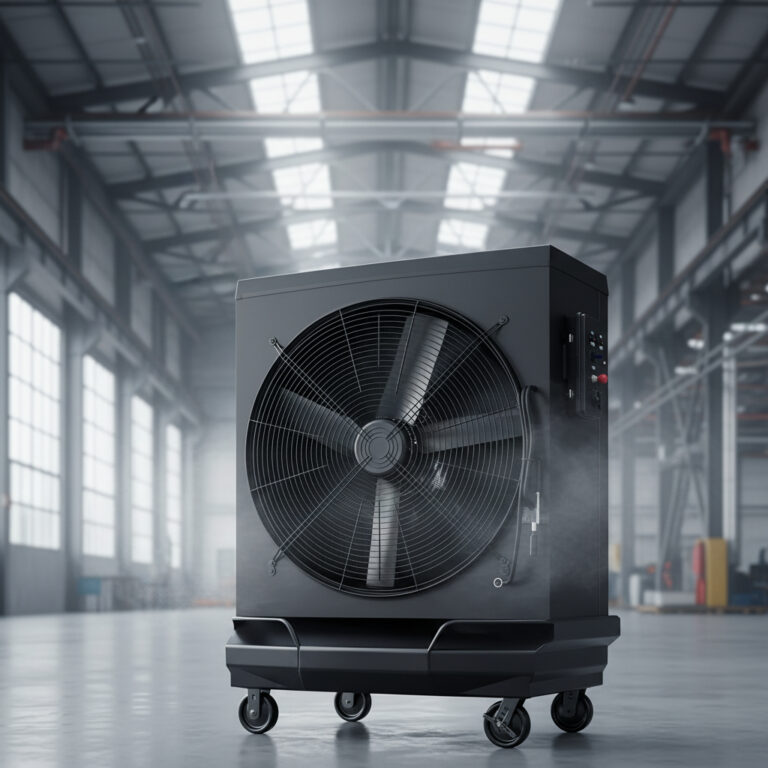
It operates on a completely different principle: the air is cooled through water evaporation, without a compressor or refrigerant. The process consumes up to 80 % less energy than a conventional air conditioning system and offers a specific advantage in ATEX zones. Specifically, the slight humidification of the air naturally reduces static electricity, one of the most common sources of ignition in dusty environments.
These devices Mounted on castors, ClimnTech units move easily from one workstation to another and are equally suited for isolated workstations or large open areas (warehouses, depots, semi-outdoor workshops).
How to choose without making a mistake
The choice rarely depends on a single criterion. The exact classification of the area first dictates the accepted certifications. Indeed, a device suitable for zone 2 is not necessarily authorized in zone 1. The nature of the risk (gas, vapor, or dust) then directs the choice toward a specific protection method. This, much like the volume to be treated: a localized workstation does not require the same power as an entire hall. The need for mobility also comes into play, particularly on sites where hazardous workstations change according to production, as does the energy budget available over time, a criterion where the gap between compressor solutions and adiabatic solutions quickly becomes significant on a seasonal scale.
An on-site audit remains the most reliable way to cross-reference these parameters without blindly arbitrating between several technical quotes that are difficult to compare.
Our teams have been supporting ATEX-classified sites for several years, from thermal diagnosis to the selection of the certified device suited to your zoning. A telephone call is generally enough to outline the relevant options for your site. Feel free to contact us.
One final point is worth keeping in mind: a cooling solution in an ATEX zone is never an isolated purchase. It is part of the single risk assessment document (document unique), the prevention plan, and often discussions with the site's inspection body. It is better to anticipate this during the selection phase rather than discovering it during an inspection.
Frequently Asked Questions
Can a standard air conditioner be installed in an ATEX zone?
No. An uncertified air conditioner contains components likely to generate a spark or hot surface, making it a potential ignition source in an explosive atmosphere.
What certification should be required for an air conditioner in an ATEX zone?
The European ATEX marking (for example II 2G IIB T4 Gb) is the standard in France and the European Union. For an international site, IECEx certification is also recommended.
Is adiabatic cooling really suitable for ATEX zones?
Yes, provided you use a device specifically certified for the area in question. Its evaporative principle even offers an additional advantage: it limits static electricity loads.
What legal obligations concern heat at the workstation?
The Labor Code requires integrating thermal risk into the occupational risk assessment. In a workstation classified as ATEX, this risk must be cross-referenced with the explosion risk in the single document.
How much does an ATEX-certified cooling solution cost?
The cost varies significantly depending on the technology, the area concerned, and the volume to be treated. A mobile adiabatic system generally remains more affordable to purchase and use than a fixed explosion-proof air conditioner. A quote based on a site assessment remains the only way to obtain reliable pricing.

 French
  English