
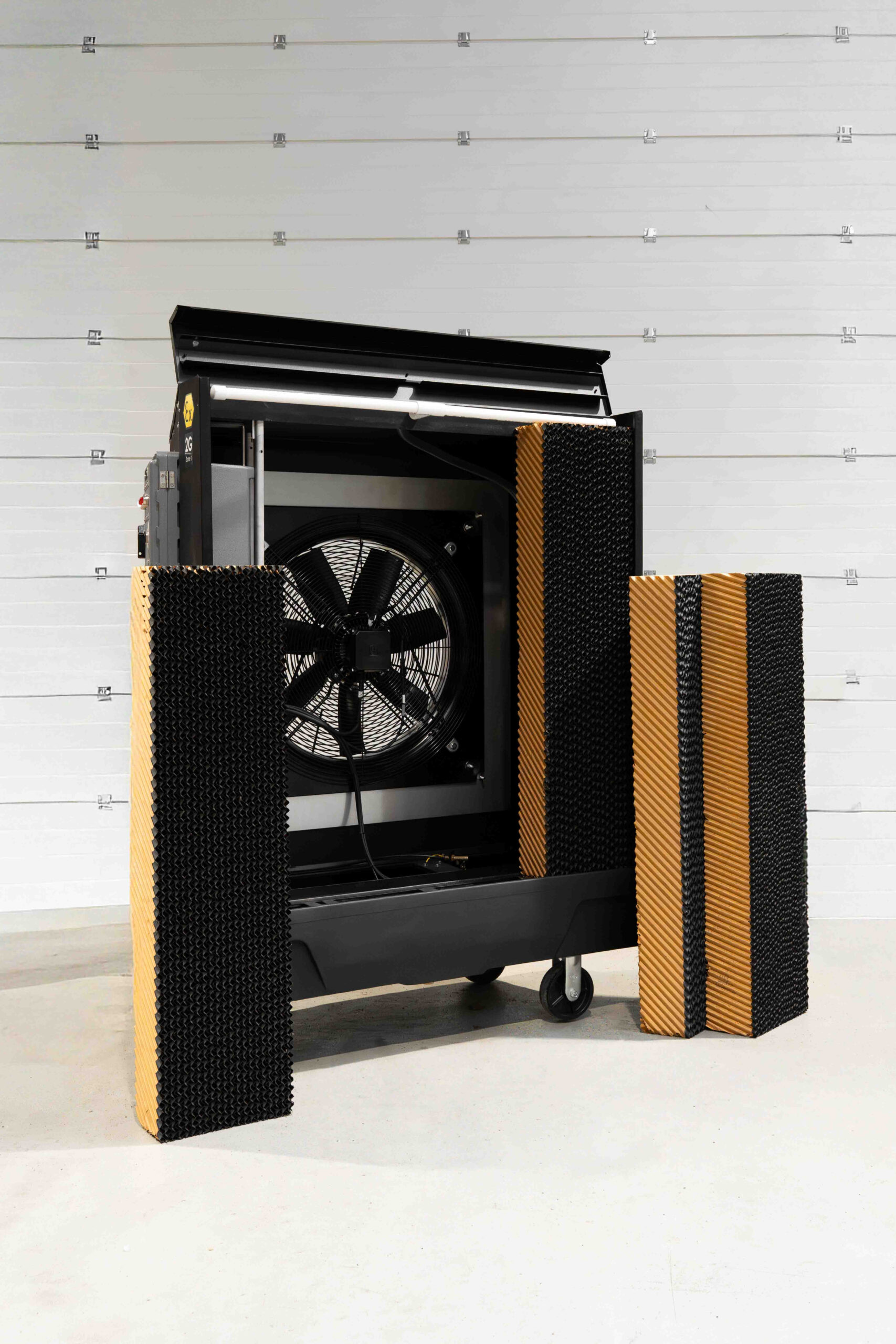
Indeed, a plant that processes vapors of solvents, flour, wood dust or hydrocarbons is constantly exposed to the risk of fire and explosion.
So, in these confined or ventilated atmospheres, the European marking ATEX provides engineers with methods. But it also provides the HSE teams and maintenance technicians with the exact electromechanical identification card for each device.
In fact, understanding this complex alphanumeric code is essential when purchasing new equipment. As in the case of a scheduled technical stop, for example. An error in interpreting a number or letter can lead to the installation of a device that generates sparks or hot spots in the heart of a classified area.
This then directly engages the operator’s civil and criminal liability.
The regulatory framework of explosive atmospheres in Europe
The safety regulations regarding explosions are based on a strict coordination between two complementary European directives. Moreover, they are transposed into the Labour Code.
Directive 2014/34/EU versus Directive 1999/92/EC
The industrial world distinguishes the obligations of the manufacturer from those of the operator:
- Directive 2014/34/EU (ATEX «equipment») It is addressed to manufacturers and integrators. It sets out the essential safety and health requirements (EESS) applicable to electrical and non-electrical appliances. These are in fact those intended to be used in an explosive atmosphere. It is this that governs the rules for affixing the normative marking.
- Directive 1999/92/EC (ATEX «working places») imposes on the employer the obligation to assess the risks and to establish a Document Relating to the Protection Against Explosions (DRPCE) and to define the ATEX zoning of its site.
In other words, an ATEX equipment is not absolutely secure. It is only secure within the operational area to which its labeling is intended.
The classification of zones: gas and dust
The zoning maps the temporal probability of the appearance of an explosive mixture:
- Gas, vapors and mist: First, Zone 0 corresponds to a permanent or frequent presence. Then, Zone 1 indicates a probable presence in normal operation; Zone 2 represents a rare and short-lived presence.
- Dusts and combustible powders: The nomenclature applies the same temporal logic across Zones 20, 21 and 22.
The adequacy of this spatial zoning to the category of the machine determines the legality of its installation.
Step-by-step anatomy of a Regulatory ATEX marking
Community marking (Directive 2014/34/EU)
Le sigle CE et numéro d'oganisme certifié
Attestates compliance with applicable European directives.
A four-digit number (such as 0080 for INERIS, 0035 for TÜV Rheinland) identifies the independent organization that validated the manufacturer's quality assurance system for production.
Le logo hexagonal ⟨Ex⟩ et les groupes d'appareils
Official European symbol of explosion protection.
- Group I: Materials reserved for underground workings in mines and quarries (grey).
- Group II: Equipment intended for all surface industries (chemistry, agro-food, oil, metallurgy, wood).
La catégorie de matériel
- Category 1: Very high level of protection (Zone 0 or 20).
- Category 2: High level of protection (Zone 1 or 21).
- Category 3: Normal level of protection (Zone 2 or 22).
Le type d'atmosphère
- G for gases, vapours and mist (Gas) ; D for dust (Dust).
Standardized technical marking (CENELEC / CEI standards)
This second segment specifies the physical barriers implemented to prevent any inflammation:
The protection mode (Ex)
It explains the engineering technique used. For example, the anti-explosive casing can be found (Ex-boyfriend or db). But also increased security (Ex e or eb), intrinsic security (Ex i or ia/ib), the internal overpressure (Ex p) or even encapsulation (Ex-m).
For mechanical equipment, the standardized ISO 80079-36 designations specify the construction safety (c). But also, the control of the source of inflammation (b) or immersion in a liquid (k).
The gas or dust group
- For the gases: IIA (propane), IBM (ethylene), IIC (hydrogen, acetylene). A IIIC-certified equipment can be installed in IIB and IIA atmospheres; the opposite is strictly prohibited.
- For the dust: IIIA (combustible stuffed toys), IIIB (non-conductive dusts such as wood or starch), IIIC (conductive dusts such as coal or aluminum).
The temperature class
- For gases, the scale extends from T1 to T6. It defines the maximum surface temperature that a component can reach under normal or predictable abnormal conditions:
T1: 450 °C | T2: 300 °C | T3: 200 °C
T4: 135 °C | T5: 100 °C | T6: 85 °C
- For dusts, the maximum permissible temperature is engraved directly in absolute value (example: T120°C or T85°C).
The level of protection of the equipment (EPL)
Introduced by the CEI 60079-0 standards, the EPL (Equipment Protection Level) synthesizes the area of use: Ga / Da (very high security), Gb/Db (high security), Gc/Dc (enhanced security).
Normative decryption and maintenance of the Ex facilities?
Advance your skills with a Qualiopi-certified course: discover the practical sessions on the page of ATEX training courses from ClimnTech.
The particular case of industrial thermal systems in a classified area
Integrating a thermal system in an ATEX zone concentrates the engineering challenges. While an engine or sensor seeks to minimize its thermal emissions, a heating device must dissipate heat without its external walls exceeding the critical self-ignition thresholds of the surrounding solvents.
Industrial heating
The use of a Industrial heating ATEX demands the abandonment of conventional convector and aerothermals. These circulate hot air under the ceiling, move combustible particles and create unnecessary thermal gradients.
The distant infrared
Recent innovations prioritize far-infrared radiation. By transmitting heat directly to the masses and operators without heating the intermediate air molecules, this technology allows for maintaining optimal comfort. All of this is achieved by strictly regulating the surface temperature below the normative thresholds T4 or T3. This fine regulation protects the health of employees, a detailed issue in our analysis on the heat regulation at work.
Thermal engineering
Specialized thermal engineering ClimnTech apply these principles to units of bio-conditioning and mobile heating. All are certified according to the requirements of ATEX sectors and zones the most binding.
Human competence as the first line of defense against security threats
Buying a machine bearing the correct European ATEX marking is not enough to guarantee the long-term compliance of a plant. As soon as a technician opens an anti-explosive connection box, clamps on a pressure seal without checking its diameter, or replaces a joint without an original part, the certification collapses. The protective casing no longer plays its role, and the installation becomes vulnerable again.
Qualification of operators
To ensure the continued operation of these installations, the technical staff must be qualified. Understanding marking, identifying sources of mechanical ignition, and following the procedures for intervention require training tailored to the different profiles: electricians, mechanics, supervisors, and HSE risk managers.
Moreover, training courses supported by Ism-ATEX auditors and recognized by third-party inspection bodies allow industrialists to validate the qualifications required by the labor inspection. This is the case, in particular, for technical inspection specialists. Centrexpert.
Training center
Finally, the design office and the training center About ClimnTech They accompany production sites in France and internationally to transform these regulatory constraints into everyday safety reflexes.
Have your teams audited and trained with the expertise of ClimnTech
Industrial risk does not tolerate any compromise regarding the training and selection of equipment.
Given the complexity of DRPCE audits and the requirements for the renewal of periodic authorizations, a customized support ensures the compliance of your installations. But also the protection of your teams.
Our training center
The training organization ClimnTech provides educational modules on-site or in a technical center:
- Operational analysis of the zoning and selection of the appropriate ATEX equipment;
- Practical reading of the signboards and compliance documentation (CE declarations, EU type certificates);
- Inspection methodology and preventive maintenance of electrical and non-electrical protection systems;
- Deployment of mobile thermal comfort solutions certified ATEX and IECEx.
Ensure the safety of your teams and the integrity of your industrial processes. Contact our trainers and application engineers via our ClimnTech contact page. Together, we develop an accompaniment program adapted to your production constraints.
Frequently Asked Questions
Frequently Asked Questions
What is the difference between an ATEX marking and an IECEx certification?
The ATEX marking stems from European directives (including 2014/34/EU) and has mandatory legal value only within the European Economic Area. The international scheme IECEx is a voluntary system administered by the International Electrotechnical Commission. Recognized in more than 30 major industrial countries (the United States, Australia, China, the Gulf countries), it facilitates the export and technical acceptance of equipment without a full local reassessment.
What does the suffix «X» or «U» at the end of an ATEX certificate number mean?
An EU type examination certificate ending with «X» indicates specific conditions for safe use. For example: restriction of the ambient temperature range, risk related to electrostatic charges or the need for external mechanical protection). The suffix «U», on the other hand, designates an incomplete component that cannot be put into service autonomously without being integrated into a complete device that has been reevaluated. This is the case of a bare terminal block or a bare enclosure.
Can equipment certified for gas (G) be used in the presence of dust (D)?
No. The mechanisms of penetration, heat transfer and inflammation differ fundamentally between gaseous molecules and dust layers. A device intended for a mixed atmosphere must necessarily bear the explicit double mention on its plaque. For example II 2 G/D, with the protection modes and thermal classes specified for each phase.
Is the ATEX training for maintenance technicians a legal requirement?
Yes. According to Article R. 4227-49 of the French Labour Code (transposition of Directive 1999/92/EC), the employer is legally required to provide employees working in areas where explosive atmospheres may form with sufficient and appropriate training in protection against explosions. This training must be renewed periodically to maintain the validity of the permits.

 French
 English
