
A production line that slows down due to the heat, visitors who shorten their stay in a museum in the middle of summer, an exhibition stand where no one lingers after 2 p.m.: cooling is no longer an optional comfort, it is a direct factor in productivity, attendance, and safety. ClimnTech designs evaporative air coolers designed to meet these three very different realities with one and the same technology.
Cooling, a topic that has become strategic
Heatwave episodes recur every summer and affect buildings that were never designed to withstand them. This is the case for metal roofs, large glass structures, exhibition halls, and high-ceilinged rooms. In a workshop, the drop in vigilance linked to the heat increases the risk of accidents.
In a public venue, it reduces visit time and the customer experience. Traditional air conditioning often remains impossible to deploy on a large scale. This is due to its installation cost, its electricity consumption, and above all its incompatibility with continuously open doors. In short, this is the case in logistics or during exhibition setup.
How an adiabatic cooling system works
The principle is based on a long-known physical phenomenon: the evaporation of water absorbs heat. A fan draws in ambient air and passes it through a constantly moistened honeycomb pad. As it evaporates, the water captures the heat from the air, which comes out cooler and slightly humidified before being distributed into the space to be treated. No compressor, no refrigerant: only air and water.
This is fundamentally what distinguishes a air cooler of a conventional air conditioner. This is also what explains its energy efficiency.
In the production area and in the ATEX zone, safety first
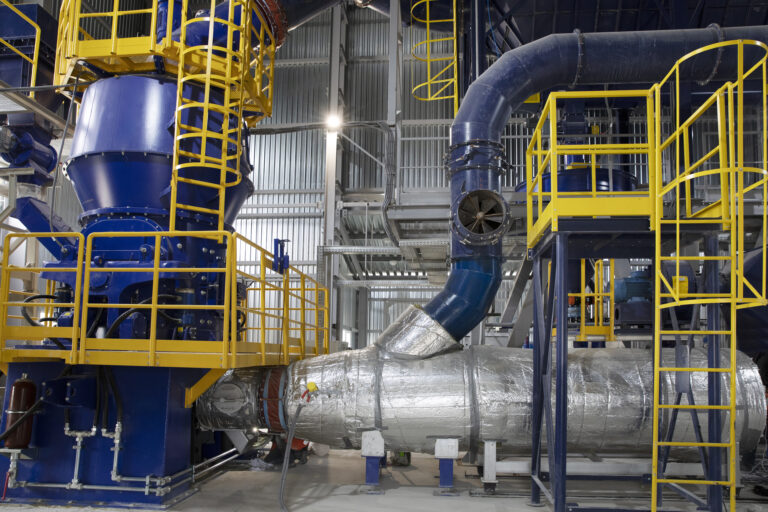
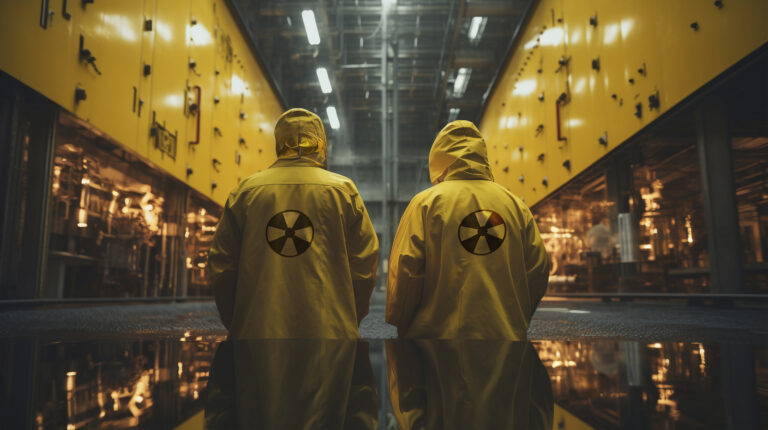
In a workshop or warehouse, a system of Industrial adiabatic air conditioning lowers the ambient temperature by 7 to 12 °C depending on atmospheric conditions. All while tolerating a constant flow of goods and open doors. At sites classified as ATEX zone, the issue goes beyond simple comfort: by increasing its humidity, the air limits the accumulation of static electricity, a well-identified risk factor in explosive atmospheres. Zone 1 and Zone 2 certified coolers (marking II 2G IIB T4 Gb) make it possible to equip these environments without regulatory compromise, even when operators are wearing restrictive personal protective equipment.
Do you manage an industrial site or a high-risk area? Let's discuss your cooling project with a ClimnTech expert.
Welcoming the public without suffering from the heat
Trade shows, conventions, temporary events
A crowded exhibition hall, hot spotlights, and aisles with stagnant air: event spaces often combine all the aggravating factors. Unlike fixed air conditioning, a mobile evaporative cooler can be deployed in just a few minutes, without any installation work, directly at the event venue. Mounted on a wheeled chassis, it can be repositioned depending on the crowd size or booth layout, and then redeployed elsewhere the following week. This is a decisive selling point for trade fair organizers, convention centers, and tent rental companies who need to guarantee a thermal comfort consistent over short durations and changing configurations.
Museums and castles: refreshing without altering the character of the place
Heritage sites pose a constraint that few solutions can resolve: lowering the temperature without installing exposed ductwork, without drilling through walls, and without exposing collections to sudden humidity fluctuations. Mobile and discreet evaporative cooling integrates into rooms where any major intervention would be ruled out. It allows historic site managers to offer tourists an enjoyable visit during heatwaves, while respecting the conservation constraints specific to listed buildings.
What adiabatic cooling concretely changes
Power consumption is limited to that of a fan, resulting in savings of over 80 % compared to conventional air conditioning. The air produced is not dry: controlled humidity promotes respiratory comfort, a point often overlooked in heavily ventilated environments. The absence of a compressor and refrigerant gas also simplifies maintenance, since there is neither a refrigeration circuit to check nor fluid to recharge. Finally, the same technology is just as adaptable to a industrial evaporative cooler fixed only to a mobile unit, which allows ClimnTech to cover very different needs with a single technical foundation.
The limits to know before investing
The humidity level
The effectiveness of evaporative cooling depends directly on the humidity level of the outside air: the drier the air, the more pronounced the temperature difference achieved. In an already very humid environment, the temperature drop is less dramatic, even though the airflow effect continues to provide a noticeable feeling of freshness for the operators.
Sizing, the business of ClimnTech professionals
It is not an air conditioner in the strict sense, and a professional must size the installation according to the local climate, the volume to be treated, and the building's existing ventilation. It is precisely this sizing work that ClimnTech offers during a discussion with its teams.
Every building, every event, and every venue has its own constraints. Request a personalized study from ClimnTech to identify the solution best suited for your business.
Frequently Asked Questions
Does an evaporative cooler replace a conventional air conditioner?
It represents a relevant alternative for large volumes, continuously open doors, or temporary uses, but it operates on a different principle than a compressor-based air conditioner. The choice depends on the building, the local climate, and the desired level of comfort.
Is adiabatic cooling suitable for ATEX zones?
Yes, provided you use certified equipment for the area in question. Models conforming to the II 2G IIB T4 Gb marking are designed for Zones 1 and 2, with the added benefit of reducing static electricity thanks to controlled humidity.
How long does it take to set up a portable cooler during a trade show?
The device is operational in minutes: an electrical connection and a water top-up are all that is needed, with no prior installation or work required.
Does adiabatic cooling present a risk to a museum's works or collections?
The system does not require any major work on the building. Appropriate sizing, carried out with a professional, makes it possible to manage the moisture intake to remain compatible with the conservation requirements specific to each location.
What temperature drop can be expected with a ClimnTech air cooler?
Between 7 and 12 °C depending on atmospheric conditions and outdoor air humidity, with a wind chill effect enhanced by the continuous airflow.


 French
  English