
When summer temperatures exceed 30°C, stables turn into saunas. Under a tin or fiber cement roof that absorbs solar heat all day, the air can exceed 40°C at mid-height. Horses, cattle, pigs, and poultry then have only one recourse: their natural thermoregulation, which quickly reaches its limits. The result: heat stress, decreased performance, health fragility, and in extreme cases, animal losses. Adiabatic cooling offers a direct, low-resource, and animal-friendly solution. Here's why this technology is becoming essential in demanding livestock farming.
The horse in the heat: precise physiological limits
The horse maintains its core body temperature around 37.5°C to 38.5°C. To dissipate excess heat, produced by its basal metabolism or by exertion, it has three mechanisms: sweating, peripheral vasodilation, and increased respiratory rate.
These mechanisms work effectively up to a certain point. Starting at an ambient temperature of 25°C, thermoregulation requires increasing energy. Beyond 30°C with high humidity, the system reaches its limits: sweating is no longer sufficient for cooling if the air is too humid to allow for effective evaporation. The horse then enters heat stress.
The consequences are observed quickly: voluntary reduction in food intake, apathy, decreased athletic performance, increased susceptibility to respiratory infections. In pregnant mares, heat stress can disrupt fetal development. In competition horses, a single week of heatwave without cooling solutions is enough to compromise weeks of preparation.
The thermal comfort zone for horses is between 5°C and 25°C. A well-ventilated stable should maintain the temperature below this upper threshold, even during the most severe summer peaks.
The limitations of conventional solutions in equine environments
Natural ventilation (open ridge vents, side windows, louvered partitions) remains the primary tool to optimize. It creates continuous air renewal through pressure differences and the chimney effect, provided the building's design allows for it. However, in hot and calm weather (precisely during heatwaves), natural ventilation loses its effectiveness. Without wind to create negative pressure, the air stagnates.
Classic industrial fans circulate air without cooling it. They move warm air and create a feeling of airflow, but as soon as the ambient temperature exceeds that of the horse's body, this circulation effect becomes insufficient or even counterproductive.
Compression air conditioning is unthinkable in a stable or an animal husbandry building. The reasons are varied:
- Prohibitive installation cost for considerable air volumes; ;
- Electrical consumption incompatible with agricultural operation; ;
- Fixed infrastructure impossible to adapt to semi-open spaces.
This, not to mention that a waterproofing stable would be incompatible with the animals' respiratory needs.
Adiabatic cooling: the natural principle adapted for livestock farming
The adiabatic cooler replicates a natural phenomenon that every horse knows instinctively: evaporation cools. When a horse sweats, it's using this exact mechanism. The adiabatic cooler applies this same principle to the ambient air.
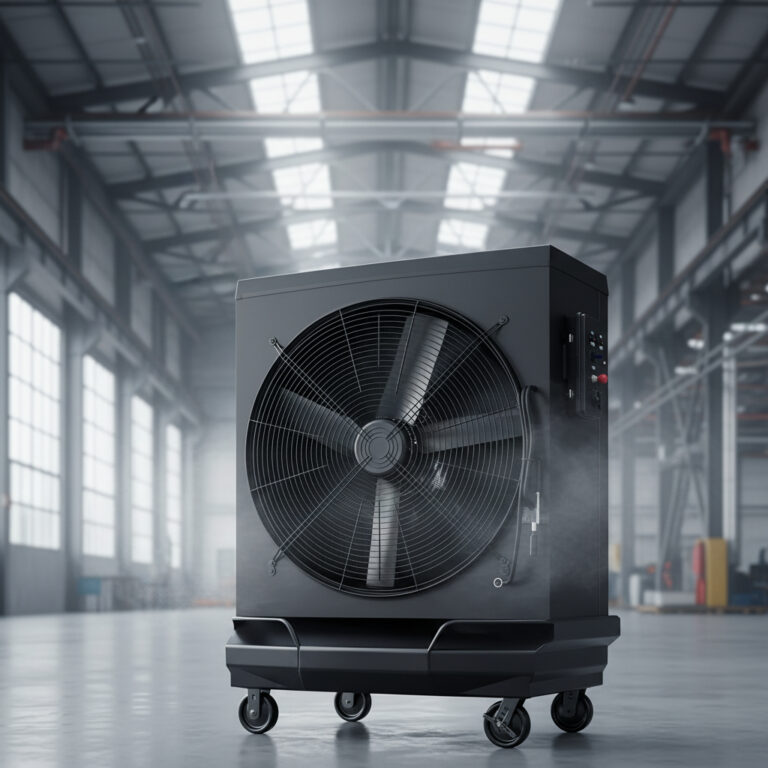
A fan draws in hot outdoor air and forces it through a constantly humidified alveolar medium. As it passes through this panel, the air releases its heat, allowing water to evaporate. It then exits 7°C to 12°C cooler, with a slight increase in its humidity level. This cool, gentle, and quiet airflow is then distributed throughout the space to be treated.
No refrigerant, no compressor, no hot surface. Power consumption is limited to that of a fan motor. Up to 80 % lower than a conventional air conditioning system.
Are you managing a stable or a breeding farm and looking to protect your animals from episodes of intense heat?
Contact the ClimnTech team for advice tailored to your building
Equines, cattle, swine, poultry: what are the benefits by species?
Horses and ponies
The adiabatic cooler, positioned at the entrance of the aisle or facing the stalls, precisely targets the animals' area. It creates a flow of fresh air at the horse's head height, where heat dissipation through the respiratory tract is most effective.
The antistatic effect of slightly humidifying the air offers an additional benefit. For instance, wood shavings bedding, a common source of static electricity, sees a reduction in airborne dust. The horse's respiratory environment is improved in two ways: temperature and air quality.
Dairy cattle
Heat stress in dairy cows reduces milk production when ambient temperatures reach 25 °C. Below this threshold, cows maintain their feed intake and milk production. Above it, they reduce their dry matter intake to limit the heat produced by digestion. This leads to a direct decline in milk yield and reproductive disturbances.
An adiabatic cooler installed in the pre-milking holding area or along the rest area can lower the ambient temperature by 7°C to 10°C. This is sufficient to keep the animal below the critical threshold and preserve zootechnical performance.
Pork and poultry
These species are even more sensitive to temperature. Pigs do not sweat and have difficulty regulating their body temperature above 25°C to 27°C. Poultry are at risk of fatal heatstroke at temperatures as low as 35°C in the absence of effective ventilation.
In intensive livestock buildings, adiabatic cooling by pad cooling (humidified panel at the air intake) is a proven solution. This is to lower the indoor temperature by 5°C to 10°C, with minimal operating costs.
Why choose ClimnTech for your stable or farm?
ClimnTech designs mobile adiabatic coolers that adapt to the reality of livestock buildings: mounted on casters, plugged into a standard outlet, operational in minutes.
Their durability is designed for agricultural environments: dust, bedding, ambient humidity, and intensive daily use. The honeycomb media with a high heat exchange surface area ensures optimal thermal performance even during severe heat waves.
The integrated water tank ensures complete autonomy without a fixed connection. It is therefore ideal for isolated stables or buildings where access to running water is constrained. For fixed installations or large-scale farms, direct connection to the mains via a float allows continuous operation without intervention.
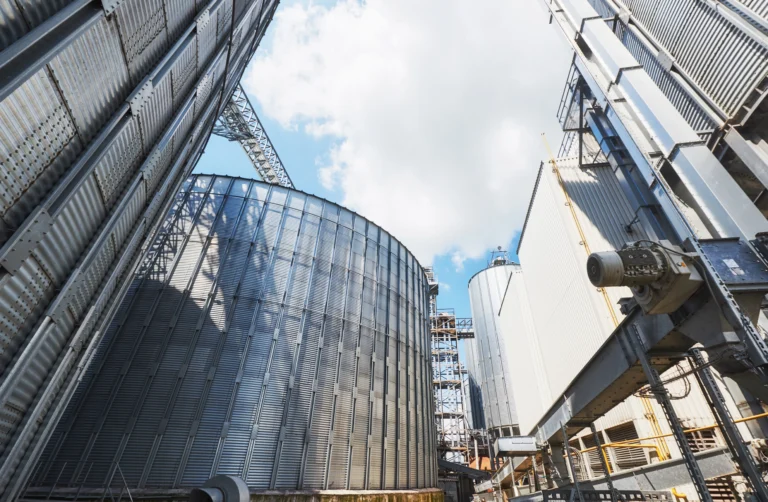
Finally, and this is a key distinguishing feature: ClimnTech coolers are available in an ATEX-certified version (marked II 2G IIB T4 Gb) for livestock operations located in areas at risk of explosive atmospheres. This includes grain storage silos, facilities for processing fermentable materials, and on-site anaerobic digestion areas.
Bioclimatic design and animal welfare: a profitable investment
Beyond the immediate comfort of animals, adiabatic cooling in livestock farming generates measurable benefits for the farm's economic performance.
For sport horses, maintaining physical condition during heat waves prevents a loss of training progress and competition postponements. For dairy cattle, every degree below the heat stress threshold directly translates into increased milk production and maintained pregnancy rates. Finally, for pigs and poultry, reducing summer mortality directly improves farm profitability.
The ClimnTech adiabatic cooler consumes little, requires no construction for installation, and can be moved according to seasonal needs or changing building configurations. Its positive impact on animal well-being also meets the growing expectations of industry specifications and European regulatory requirements for animal protection.
In livestock farming as in stables, adiabatic bio-cooling is no longer an option: it is a mature, proven, and economically justified technical solution in the face of increasingly intense summers each year.
Your livestock building or stable deserves a cooling solution that's up to par for your animals.


 French
  English