
In many industrial sectors, certain workspaces present a permanent or occasional risk of explosion. These environments receive a precise regulatory classification: they are referred to as ATEX zones, an acronym for’ATatmospheres EXPlosives. For any HSE manager, establishment manager, or maintenance manager, mastering this classification is a legal obligation. Just as understanding its concrete implications for equipping workstations is an operational necessity. ClimnTech provides an overview.
What is an explosive atmosphere?
An explosive atmosphere forms when a mixture of flammable substances (in the form of gas, vapor, mist, or dust) combines with air in sufficient proportions to ignite in the presence of an ignition source. If the combustion spreads instantaneously throughout the entire mixture, it causes a sudden pressure increase: this is an explosion.
The distinction between atmosphere explosive and atmosphere Explosible It is important. An explosive atmosphere is already present under ignition conditions. An explosive atmosphere is likely to become one depending on local conditions: pipe leakage, pipe rupture, thermal variation, machine startup.
The sources of ignition that can trigger an explosion are numerous: electrical or electrostatic arcs, mechanical sparks, hot surfaces, and open flames. It is precisely this broad spectrum that necessitates strict regulations on all equipment deployed in these areas.
The regulatory framework: two ATEX Directives
European regulation organizes responsibilities around two complementary directives.
The Directive 2014/34/EU (formerly 94/9/EC) is aimed at equipment manufacturers. It requires CE marking for equipment used in ATEX zones and defines the safety categories that each piece of equipment must comply with according to the zone in which it will be deployed.
The Directive 1999/92/EC It is addressed to employers. It obliges them to assess explosion risks in their facilities, to delineate ATEX zones, and to formalize this analysis in an Explosion Protection Document (DRPCE). This document must demonstrate that the risks have been assessed, that the measures taken meet the directive's requirements, and that the equipment used is compliant with the zone in which it operates. The zoning itself is carried out under the responsibility of the site manager.
ATEX Zones Classification: Gases and Dusts
ATEX zoning classifies areas based on the probable frequency and duration of an explosive atmosphere's presence. Two families of risks coexist: gas/vapor/mist atmospheres (Zone G) and dust atmospheres (Zone D).
Gas zones (G)
Zone 0 The explosive atmosphere is present permanently or for very long periods (more than 1,000 hours per year). Typical example: the inside of a tank containing a flammable liquid. Equipment deployed here must belong to Category 1G, the highest safety level.
Zone 1 Explosive atmospheres are likely to occur occasionally during normal operation, between 10 and 1,000 hours per year. Examples: immediate vicinity of a valve or flange on a flammable product pipeline, area around a hydrocarbon storage vent. Required equipment is category 2G.
Zone 2 : An explosive atmosphere is unlikely during normal operation and, if it occurs, it only lasts for a short time (less than 10 hours per year). Examples: peripheral areas to Zone 1, ventilated rooms containing hazardous installations. Category 3G equipment is sufficient.
Dust zones (D)
Zone 20 permanent or prolonged presence of flammable dust clouds. Required equipment category: 1D.
Zone 21 Occasional release of dust clouds during normal operation. Required Category: 2D. Affected sectors: flour mills, grain silos, sugar industries, wood processing, pharmaceuticals.
Zone 22 : unlikely and short-lived presence of suspended dust. Required category: 3D.
A technical point to remember about dust: the visible presence of deposits already indicates a probability of a hazardous area. From 50 grams of dust per square meter (or 0.3 mm thick), the conditions for an explosion are met if this deposit is suspended in the presence of a sufficiently powerful ignition source.
Temperature class: a decisive parameter
Each piece of equipment deployed in an ATEX zone carries a temperature class, noted T1 to T6, which indicates the maximum surface temperature the device can reach. This value must remain below the auto-ignition temperature of the gas or dust present in the zone.
For example, ethylene ignites spontaneously at 425 °C (T2 class), while certain organic dusts have much lower auto-ignition temperatures. Equipment classified as T4 does not exceed 135 °C on its surface. This covers the vast majority of common industrial environments.
Are you managing an ATEX-certified site and looking for compliant thermal comfort solutions? Contact ClimnTech experts for advice tailored to your area
Read the ATEX equipment marking
Any device certified for ATEX zones bears a standardized marking that summarizes all of its safety features. Let's take the marking for ClimnTech coolers: II 2G IIB T4 Gb.
This marking is deciphered as follows:
- II Group II, surface industry (as opposed to Group I, reserved for mines)
- 2G Category 2, gaseous atmospheres, usable in Zone 1 and Zone 2
- IBM : gas subgroup, covering ethylene and products of the same or lower hazard level (propane, methane, etc.)
- T4 maximum surface temperature of 135 °C
- Ah high gas protection level
This marking specifically means that the equipment can be deployed in Zone 1. The most common level of hazard in surface industries with a risk of gas explosion.
Sectors concerned by ATEX zones
ATEX zones are found across a very wide industrial spectrum:
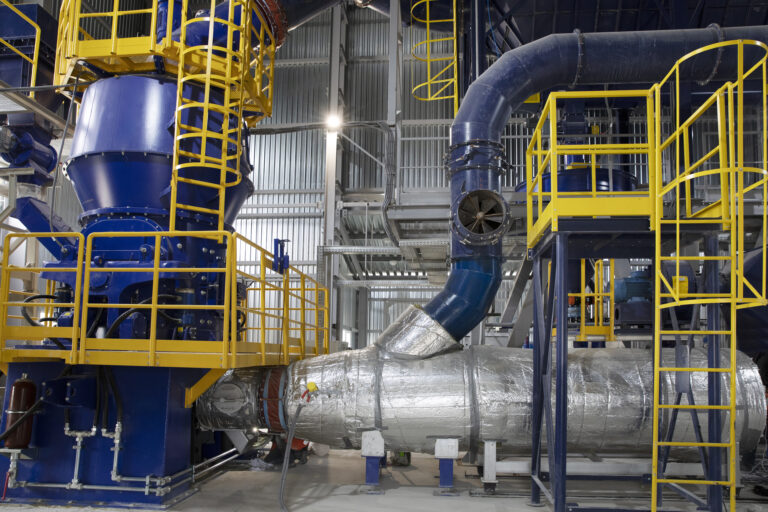
Petrochemicals and refining around storage tanks, distillation columns, and pumping stations. The risk of flammable gases is constant in certain areas.
Pharmacy and fine chemicals handling of volatile organic solvents, reactors under controlled atmosphere.
Agribusiness cereal silos, malting plants, sugar refineries, flour mills, combustible organic dusts generate extensive zones 21 and 22.
Surface treatment and industrial painting Paint booths, drying areas with solvents.
Service stations and hydrocarbon depots unloading zones, fill pits, vent surroundings.
Water treatment and methanization biogas production and storage areas.
Thermal comfort in ATEX zones: a challenge that most equipment cannot solve
This is the paradox faced by all ATEX site managers: legal obligations to protect workers from heat apply with the same force in an explosive zone as in a standard workshop. However, usual cooling and heating solutions (standard mobile air conditioners, fan heaters, convectors) cannot be used there. Their unprotected electric motors, heating elements, or contactors all constitute potential ignition sources.
ClimnTech is one of the very few companies to offer certified thermal comfort solutions for the most demanding ATEX zones.
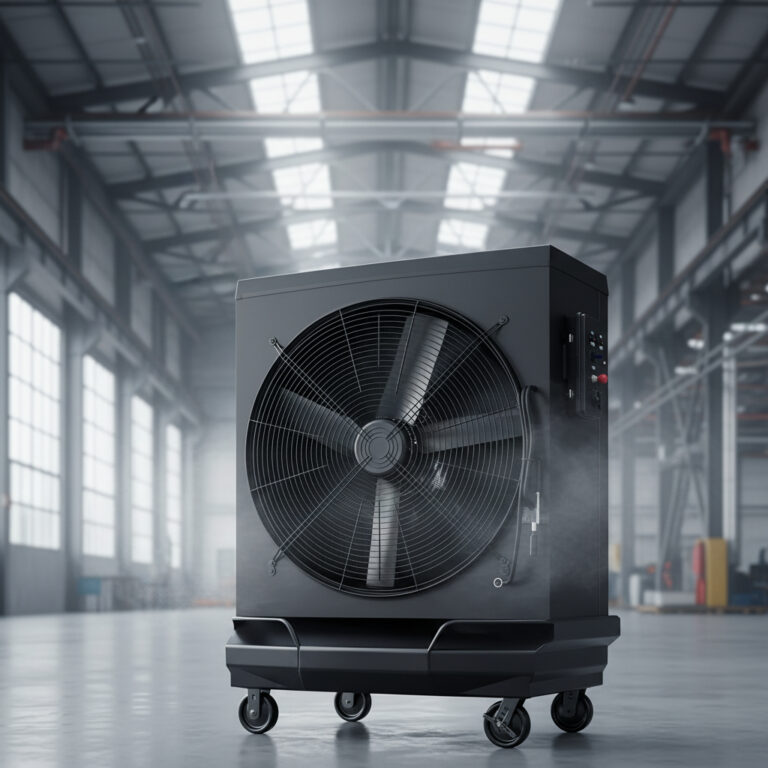
The ClimnTech Adiabatic Coolers
They carry the marking II 2G IIB T4 Gb, making them usable in Zone 1 and Zone 2 for gaseous atmospheres. Their operating principle (hot air passing through a humidified honeycomb medium) makes them naturally antistatic. Furthermore, the slight humidification of the air they produce reduces static electricity tension in the immediate environment. Far from worsening the risk, the adiabatic cooler actively contributes to containing it.
The ClimnTech Far Infrared Heating Panels
They are also ATEX certified. With a surface temperature maintained between 70°C and 80°C (well below T3 (200°C) and T4 (135°C) classes), they directly heat the operator at their workstation without generating dangerous hot surfaces, exposed resistors, or forced ventilation. In winter, they represent the only targeted heating solution deployable in explosive zones without ignition risk.
The two ranges also rely on IECEx international certification, which facilitates their deployment at industrial sites outside the European Union.
What an HSE manager must check before any deployment
Before introducing thermal equipment into an ATEX zone, three checks are necessary: the equipment category must match the zone level (category 2G minimum for Zone 1), the gas group covered by the certification must encompass the substances present on the site, and the temperature class must remain below the auto-ignition temperature of the most sensitive product in the zone.
ClimnTech Equipment explicitly detail each of these parameters in their technical documentation, in accordance with the requirements of Directive 2014/34/EU.
Do you wish to equip an ATEX zone with certified cooling or heating? Request your sizing study from the ClimnTech team.
 French
  English